Customer acquisition is how you keep your sales funnel full of high-intent prospects. Whether you run an insurance brokerage, a mortgage company or a home services firm, generating every single lead in-house isn't always practical or scalable.

That is where lead vendors come into play.
Understanding what a lead vendor is, how they operate across different verticals and how real-time technology like ping post powers the industry is important for scaling your lead business efficiently.
What is a Lead Vendor?
A lead vendor (also referred to as a lead provider, broker or seller) is a business that specializes in capturing consumer interest and selling that contact data to buyers looking for new customers.
Instead of building and managing every ad campaign yourself, you partner with lead vendors who collect prospect information, such as a homeowner requesting a roof replacement quote or a driver looking for cheaper auto insurance, and deliver those prospects directly to your sales pipeline.
The 3 Main Types of Lead Vendors
- Direct Publishers: Companies that own their own websites, landing pages and search or social media campaigns to generate leads directly from consumers.
- Lead Aggregators / Networks: Intermediaries that pool leads from a network of affiliate publishers, packaging and distributing them at scale.
- Lead Brokers: Entities that purchase leads from multiple sources in real time and resell them to buyers based on specific targeting rules.
Lead Vendors Across Key Industries
While lead vendors operate in almost every B2C and B2B sector, their role is especially prominent in high-value, highly competitive industries:
- Insurance (Auto, Health, Life, Home): One of the largest lead markets. Vendors generate massive volumes of inquiries, often selling them as shared leads (distributed to 3–5 buyers) or exclusive leads.
- Mortgage & Refinance: Highly sensitive to economic cycles and interest rates. Vendors capture long-form financial profiles and filter prospects by credit score, loan amount, and property value.
- Home Services & Solar: Driven heavily by geographic location. Vendors focus on hyper-local targeting for solar installations, HVAC repairs, roofing and window replacements where customer lifetime value is high.
- Legal (Personal Injury, Mass Tort): High-value acquisition where individual leads can command premium prices. Precision and strict compliance verification are critical here.
How Modern Lead Vendors Deliver Leads: The Ping/Post Model
In the early days of lead generation, vendors delivered spreadsheet files via email at the end of the day. Today, speed and real-time processing are everything, and the gold standard for lead delivery is Ping Post.
What is Ping/Post?
Ping post is a real-time lead auction process that allows vendors to sell leads dynamically before collecting or transferring personal identifying information (PII).
In a standard ping post transaction, the workflow moves across three distinct phases in fractions of a second:
- The Ping (Partial Data): When a consumer completes a web form, the lead vendor immediately transmits a "ping" to prospective buyers or their lead distribution software (like boberdoo). This initial message contains only high-level, non-identifying parameters such as zip code, loan amount or vehicle year protecting consumer privacy while allowing buyers to evaluate the offer.
- The Dynamic Bidding: The buyer's lead distribution platform receives the ping, instantly evaluates the parameters against pre-set purchasing criteria, and submits a dynamic bid reflecting what that specific lead profile is worth to the business.
- The Post (Full Data): Once the lead distribution system calculates the highest bidder across all buyers, the vendor "posts" the full lead payload including sensitive contact information like name, phone number and email address directly to the winning buyer for immediate follow-up.
Why Ping/Post Matters
- For Vendors: Maximizes revenue by ensuring every lead is sold to the highest bidder in real time.
- For Buyers: Only pay for leads that match their precise buyer criteria without overpaying for irrelevant prospects.
- For Consumers: Protects consumer privacy by ensuring personally identifiable information (PII) is only shared with the winning service provider.
Lead Vendor vs. Lead Distribution Software
It is helpful to distinguish between the vendor and the technology that manages the transaction:
- The Lead Vendor provides the consumer data (the product).
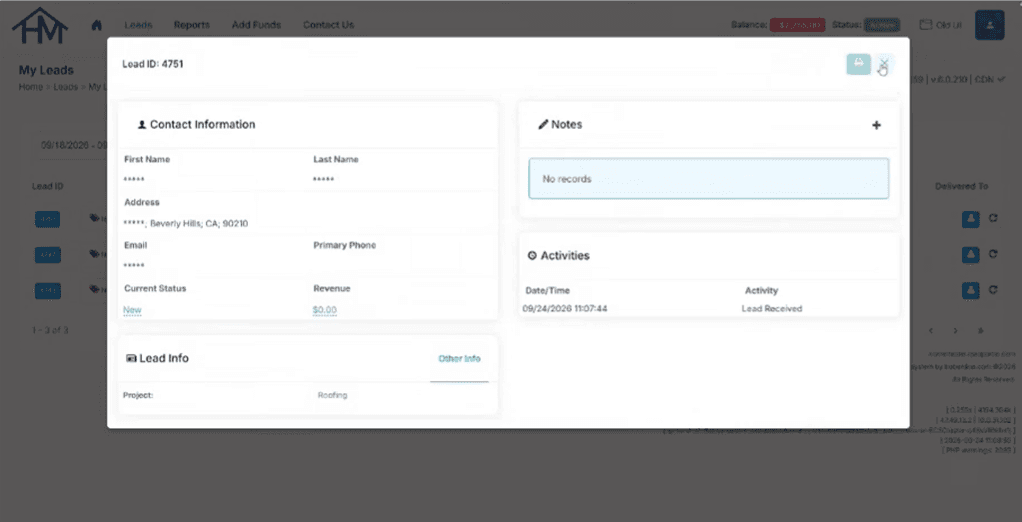
- Lead Distribution Software (like boberdoo) is the technology engine that receives, validates, prices, routes, and tracks those leads in real time.
When you buy from multiple lead vendors, lead distribution software acts as your traffic controller, ingesting pings and posts, checking for duplicates, verifying compliance tokens and routing leads to your CRM instantly.
Checklist: Key Factors for Vetting Lead Vendors
Partnering with the wrong vendor can drain your marketing budget and expose your business to legal liability. Before buying from a new lead provider, evaluate them against these core criteria:
The Lead Vendor Vetting Checklist
- TCPA & Legal Compliance: Do they strictly collect explicit prior written consent? Do they supply trusted compliance tokens like Jornaya LeadiD or ActiveProspect TrustedForm with every lead?
- Data Provenance & Transparency: Are they transparent about how and where the lead was generated (e.g., search ads, organic content, co-registration)?
- Exclusivity Terms: Is the lead sold exclusively to you, or is it a shared lead? If shared, how many total buyers receive the same lead?
- Downstream Monitoring & Data Seeding (via Assumed): Do you actively test and audit how vendors handle leads after acquisition? Planting synthetic seed profiles from Assumed into lead flows allows you to catch unauthorized lead reselling, track outreach frequency and verify sales script compliance with timestamped proof.
- Technical Integration: Do they support real-time API integrations, ping/post routing and custom webhooks for seamless connection to your lead management system?
- Scrubbing & Return Policies: Do they validate phone numbers and emails prior to delivery? What is their policy for refunding or crediting invalid data (e.g., disconnected numbers or fake names)?